

Key Takeaways
- With our partners at the University of León, we’ve been studying the communication of a unique population of cooperatively breeding carrion crows in Northern Spain. In this population, entire families – not just the mother or father – participate in chick-rearing, including feeding and protecting the nests. We hypothesize that this coordination and cooperation could yield complex vocal dynamics, making them especially compelling for bioacoustic study.
- In a recent study, our partners used lightweight biologging devices (MiniDTAGs) to record high-resolution acoustic and behavioral data from this population, capturing the subtle, low-amplitude calls that traditional directional microphones rarely detect.
- ESP’s machine learning model Voxaboxen was used to detect over 127,000 vocalizations that were then classified into calls from tagged adults, other adults in the family, and chicks.
- Intermediate- to low-amplitude calls were frequent, suggesting that much crow communication happens at close range within groups, rather than at long distances
- An analysis of 825 hours of nest-cam video found no statistically significant impact of the biologgers on crow behavior or reproductive success, suggesting minimal impact on crow welfare.
- While this study collected and analyzed the audio, video, and accelerometer data streams separately, it sets the stage for future work – developing an analytical framework integrating these multimodal signals for a more holistic understanding of animal communication and behavior.
New Technology Uncovers the Full Vocal Repertoire of Carrion Crows
Studying the complex communication systems of wild birds has been limited by technology’s ability to listen closely. Traditional recording methods usually rely on directional microphones that only capture loud, long-distance calls, leaving the subtle, close-range vocalizations – the likely murmurs of social interaction – unheard.
New research from Earth Species Project partners at the University of León utilizes advanced, animal-borne biologging devices to overcome this hurdle, offering an unprecedented look into the vocal and social lives of a population of wild carrion crows (Corvus corone).
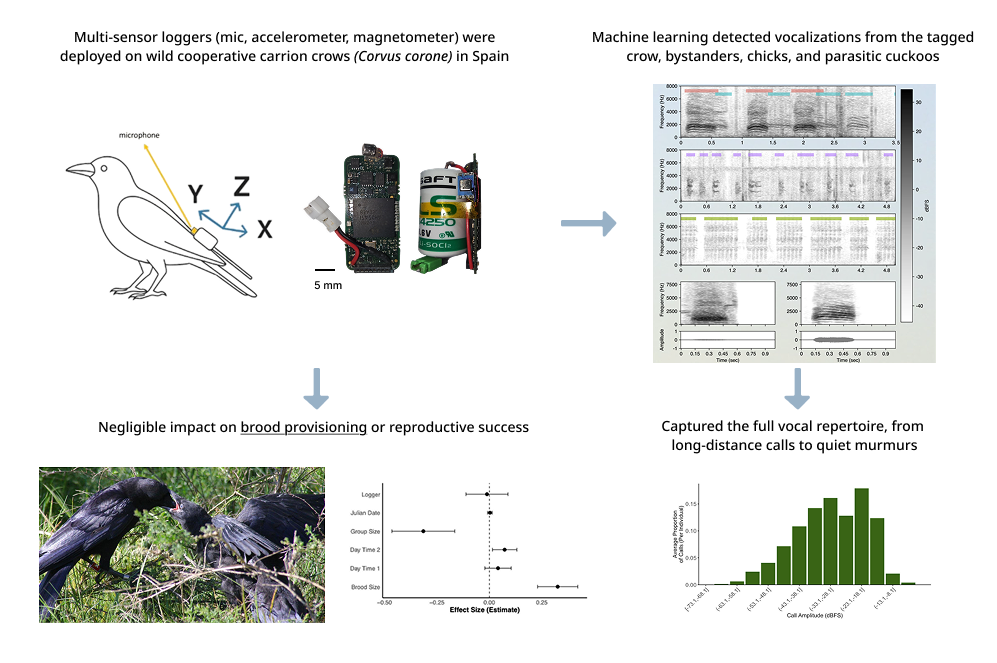
In northern Spain, carrion crows live in families that cooperate to raise their chicks and defend against predators. By deploying mini-biologgers, the researchers captured thousands of hours of high-fidelity recordings from the crows’ vantage point. They then used our detection model, Voxaboxen, to automatically identify and label the vocalizations at scale. Together, this rich dataset provides the first glimpse into the full spectrum of wild crow communication.
A Closer Look at the MiniDTAG
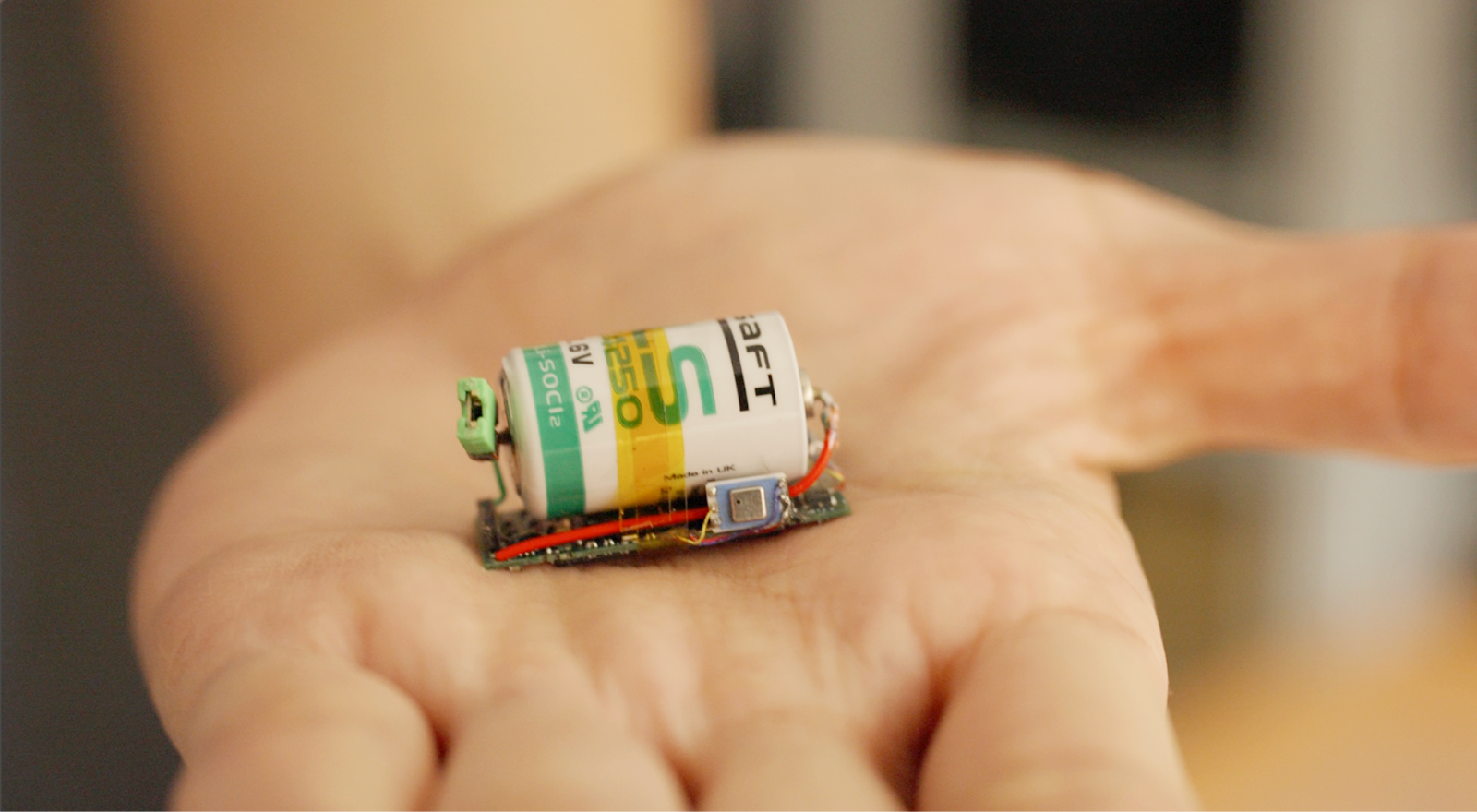
One of the key tools in this study is the MiniDTAG, a lightweight, multi-sensor biologging device. Originally designed for bats (Stidsholt et al., 2019), it integrates a microphone, accelerometer, magnetometer, and pressure sensors into a compact package suitable for medium- to large-sized birds.
Researchers successfully deployed 52 MiniDTAGs on carrion crows in northern Spain over three breeding seasons. In order to limit rehandling and to minimize the crows’ stress during tag removal, the biologgers were attached using an auto-releasing method that allowed them to drop off naturally over time (on average, after about 18.5 days). Of the devices, 87% were recovered, each providing an average of 83 hours of data.
Detecting and Identifying Crow Calls With Voxaboxen
With thousands of hours of audio captured from the crows’ perspective across three breeding seasons, the team needed a way to process and annotate the data efficiently and accurately. ESP’s machine learning model Voxaboxen was used to automatically detect and label the crows’ vocalizations at scale, identifying 127,750 adult crow vocalizations.
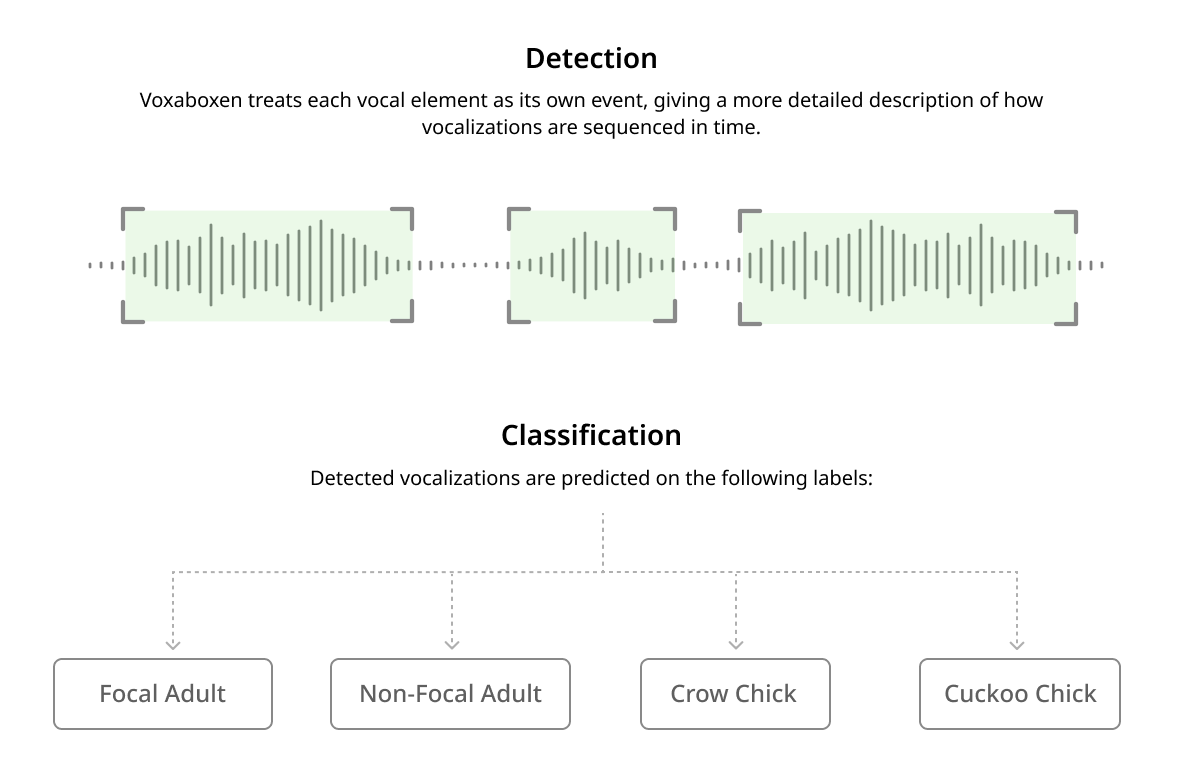
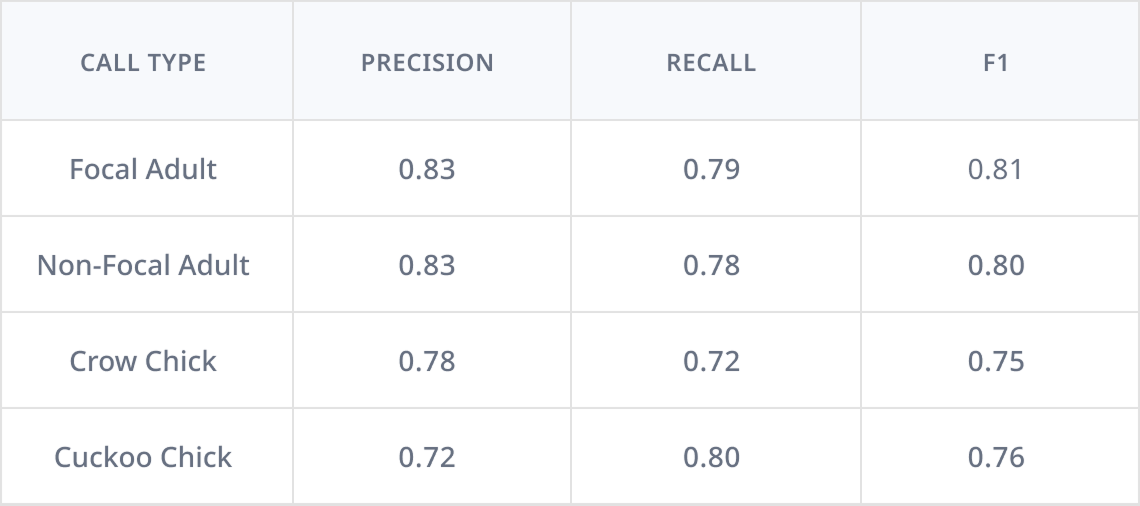
The detected vocalizations were classified into calls made by the tagged adult, other adult crows, crow chicks, or great spotted cuckoo nestlings – a common brood parasite in this population who may also contribute to the survival of crow chicks (Canestrari et al., 2014).
Voxaboxen performed well, achieving high precision and recall. Automating key stages in the annotation workflow made it far more manageable to analyze the dataset at this scale.
Capturing the Quiet Side of Crow Communication
The use of animal-borne microphones allowed researchers to sample the full vocal repertoire of individual crows, capturing calls across a wide range of amplitudes, from quiet, subtle calls to powerful, long-distance ‘kaa’ calls.
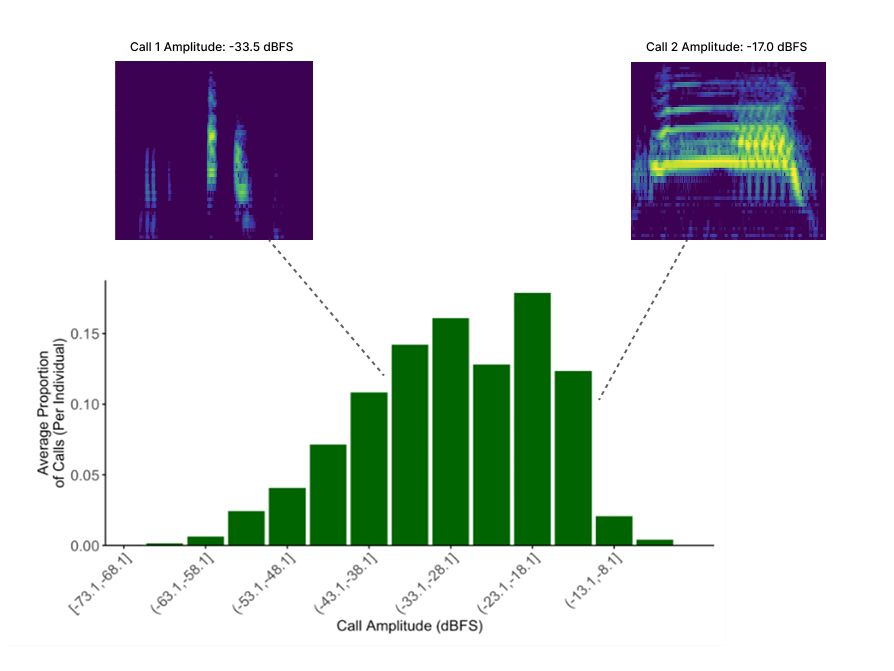
A key acoustic result revealed that intermediate- to low-amplitude calls were frequent. This prevalence of quieter sounds suggests that most vocalizations are directed toward members of the same group who are nearby. In a species that engages in complex cooperative behaviors like joint chick care and territorial defense, these close-range calls are expected to play a crucial role in coordinating communal tasks. The system was also effective at recording non-focal, close-range calls, demonstrated by the successful capture of the sound of crow chicks begging when tagged adults visit the nest.
Beyond Sound: What Motion Data Reveals
In addition to capturing audio, the MiniDTAG’s accelerometer data makes it possible to analyze the crows’ motion patterns in detail. To explore this, the team simulated predator intrusions using a stuffed goshawk (a natural predator), which prompted the crows to dive at the goshawk. These dives showed a distinctive acceleration signature compared to the crows’ regular flight patterns.
This provides a proof-of-concept for using motion data to identify and monitor important behaviors. Together, the motion data, labeled audio, and thousands of hours of nest-cam videos lay the groundwork for future multimodal frameworks that can integrate these signals for a more holistic understanding of crow behavior and communication.
Minimizing Impact: Assessing the Effects on Crow Behavior and Welfare
While biologgers are a powerful method for observing animal communication, a significant concern is ensuring the devices do not disrupt or harm the animals’ natural behavior and welfare.
To better understand the impact, the researchers analyzed 825 hours of nest camera video to evaluate if and how the MiniDTAGs affected crow behavior and breeding outcomes. Analysis across 36 nests allowed the researchers to compare tagged and untagged crows. They tracked how often adult crows fed their chicks, and monitored the number of their chicks who survived to grow up into fledglings (young birds who have left the nest, but are still developing into adults).
Overall, researchers measured the effect of the biologgers on the adult crows’ feeding rate and the number of surviving fledglings and found no statistically significant impact on tagged crows versus untagged.
As biologging technology advances and becomes more widely used, it is increasingly important to understand how these devices affect the animals wearing them. A review by Bodey et al. found that only about a third of biologging studies include enough information to fully assess the impact of their devices, highlighting the need for more consistent welfare reporting across the field. By documenting attachment methods, tag load, and behavioral comparisons, this study contributes to this broader effort to better understand and minimize device impact on animal welfare. As these tools continue to develop, ongoing monitoring will remain essential to ensure we study wild animals responsibly while still gaining valuable ecological insight.
In summary, this research demonstrates that lightweight, multi-sensor biologgers, paired with advanced machine learning, can capture high-quality acoustic and motion data on wild crows while maintaining low impact on natural behavior and reproductive success. This approach opens new frontiers for exploring the mechanisms of cooperation and communication in complex social species.